


How to Light a Furnace Pilot Light: A Step-by-Step Safety Guide
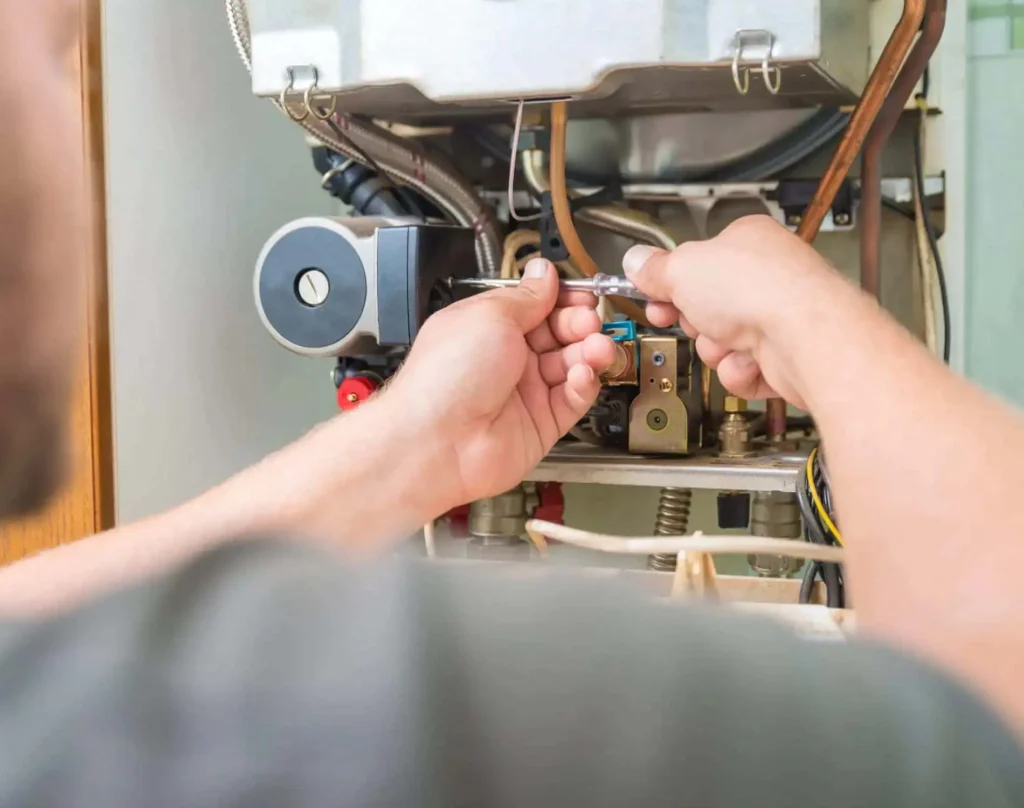
Cold house, furnace won’t kick on, and somewhere in the back of your mind you’re thinking “didn’t this happen last winter too?” Nine times out of ten when we get this call, it’s the pilot light. It went out, and nobody’s told the thermostat that’s the problem.
The good news is that relighting a pilot is genuinely something most homeowners can do themselves, if the furnace still has one. Not all of them do anymore, which trips people up more than you’d think. Below is the process we walk people through over the phone, plus the parts where we tell people to stop and just call someone.
Do you even have a pilot light to find?
This matters more than people expect. If your furnace was installed within the last 15 to 20 years, there’s a decent chance it doesn’t use a standing pilot at all — it uses hot surface ignition or a direct spark igniter instead. No flame sitting there waiting to be lit. Instead there’s a small ceramic element that glows red-hot on its own and lights the burners electronically.
So if you’ve had the access panel off for ten minutes hunting for a little blue flame and can’t find one anywhere, that’s probably why. And it changes the fix: a furnace with electronic ignition that won’t heat is more likely dealing with a bad igniter, a dirty flame sensor, or a control board issue, not something you’re going to solve with a lighter.
Furnaces from before the mid-90s almost always have a standing pilot — a small flame that stays lit around the clock, heat on or not. Units from roughly the mid-90s through the early 2000s often split the difference with an intermittent pilot that only sparks when the thermostat calls for heat. If yours falls into either of those camps, keep reading.
Finding it
Shut the furnace off at the thermostat first, and kill power at the switch or breaker while you’re at it. Pull the lower access panel — usually a couple of screws, sometimes it just lifts off — and look toward the burner compartment. You’re after a small metal tube with a thin wire running next to it (that’s the thermocouple), sitting just above or beside the main burners.
There should be a lighting label riveted somewhere on that panel or the burner door. Read it. Every furnace is a little different in exactly where the pilot opening sits and how the valve is labeled, and that sticker is written for your exact model. This guide covers the general process; the sticker covers your furnace.
Before you touch anything
If you smell gas — that rotten-egg smell — stop reading and go outside. Don’t flip switches, don’t light anything, don’t even use your phone until you’re out of the house. Call your gas utility from the driveway.
Assuming there’s no gas smell, lower the thermostat so the furnace doesn’t try to fire up while you’re working, and locate the gas control knob on the valve near the pilot. It’s normally marked OFF, PILOT, and ON. Grab a long-reach lighter if you have one — a regular match puts your knuckles closer to the pilot opening than most people are comfortable with.
Lighting it
- Turn the gas knob to OFF.
- Wait five minutes. Actually wait — this is the step people rush, and it’s the one that keeps the process safe. It lets any gas that’s built up in the burner compartment clear out before you bring a flame near it.
- Turn the knob to PILOT. That’s a different setting from ON — it only feeds gas to the pilot itself.
- Press the knob down and hold it. Most valves need constant pressure to let gas flow to the pilot at all.
- Light the pilot through the opening the label described, still holding the knob down.
- Once it catches, keep holding for another 30 to 60 seconds. That’s how long the thermocouple needs to warm up enough to generate the current that keeps the gas valve open by itself. Let go too early — especially in a cold garage or basement — and it’ll just go right back out.
- Let go slowly. You should see a small, steady blue flame holding on its own.
- Turn the knob to ON, put the panel back on, restore power, and bring the thermostat up. The main burners should catch within about a minute.
Two failed attempts is your limit. If it won’t catch by then, something’s off mechanically and no amount of retrying fixes that.
It lit, but it won’t stay lit
This is the callback we get more than any other version of this problem, and it’s almost always one of the same handful of things. A thermocouple that’s weakened with age won’t generate enough voltage to hold the valve open once you release the knob — this is probably the single most common cause, and it’s a cheap, quick fix for a technician. A draft can do it too; furnace closets near exterior doors or dryer vents get more airflow than you’d guess, enough to snuff a small flame repeatedly. And a dirty pilot orifice or flame sensor causes the same symptom if the furnace hasn’t been serviced in a year or two (we cover the cleaning side of that in our furnace cleaning guide).
When this stops being a DIY job
Relighting a pilot once is normal. A few situations where you should put the lighter down and call someone instead:
The gas smell comes back after you’ve relit it. The pilot goes out again within a day or two — especially more than once. You see soot or scorch marks, or the flame’s burning yellow or orange instead of blue, which points to incomplete combustion and possible carbon monoxide. The furnace makes a rumbling or delayed “whoosh” sound when it fires. Or the furnace is pushing 15+ years old and this is already the second or third pilot issue this season — at that point a furnace repair visit will tell you whether it’s worth fixing again or whether you’re better off pricing a furnace replacement.
If the pilot won’t light at all, or lights weak, it’s also worth checking whether the gas supply itself is the issue rather than the furnace — a stove or water heater running low and orange flames elsewhere in the house is a tell. That’s a gas plumbing question more than an HVAC one.
And a small thing that comes up more than you’d expect: sometimes it’s the water heater’s pilot going out, not the furnace’s, and the two get confused because they’re often in the same closet. Steps are similar but the likely causes differ a bit — our water heater repair page covers that version.
So it doesn’t happen every month
A furnace that behaves itself all winter usually comes down to a yearly tune-up rather than luck — someone cleaning the burner assembly, checking the thermocouple’s output, clearing dust out of the pilot area before it becomes a problem you notice at 6am in January. Our DIY furnace maintenance tips cover what you can reasonably handle yourself between visits.
A few questions we get about this
Is relighting a pilot actually safe to do myself? In most cases, yes — as long as there’s no gas smell and you’re following the wait time and instructions on your furnace’s own label rather than winging it. If it won’t hold after a couple of tries, that’s your signal to stop rather than keep going.
Why does my pilot keep going out, even after I relight it? Usually a thermocouple on its way out, a draft in the furnace closet, or buildup around the pilot itself. Less often, it’s pointing to something bigger like a heat exchanger crack or a gas pressure issue, which is exactly why a pilot that won’t hold more than once or twice deserves a real look rather than another relight.
My furnace has no pilot light anywhere. Is something wrong with it? Probably not — it might just be newer than you think. Most furnaces installed in the past couple of decades use electronic ignition instead of a standing pilot. If it’s not heating, the fix is on the igniter or flame sensor side, not something you can light with a match.
What does it cost to fix a bad thermocouple? Relighting itself costs nothing. A thermocouple swap is one of the less expensive furnace repairs out there, though the exact price depends on the model and how easy it is to access. A technician can usually diagnose and fix it in the same visit.
Ace Plumbing Heating & Air Conditioning has kept Sacramento-area homes warm for decades. If your pilot won’t stay lit, or the furnace behind it just isn’t worth relighting anymore, contact us or call 916-455-4548 — we run same-day furnace repair across the greater Sacramento area.