


Air Conditioning for Manufactured Homes
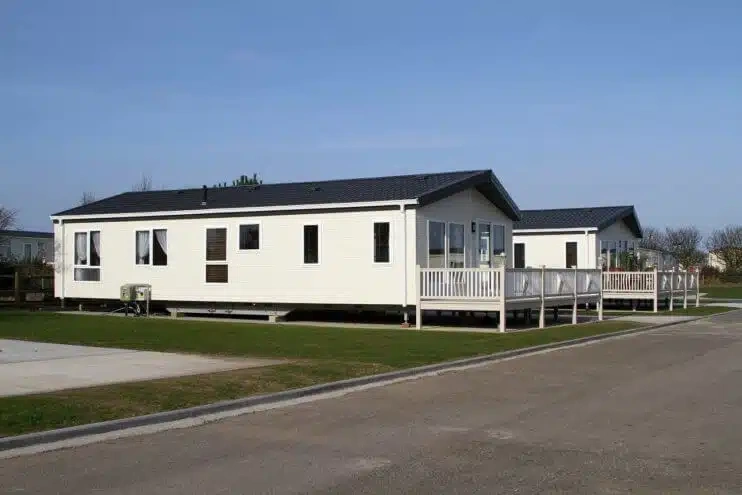
Sacramento summers regularly top 100°F, and a manufactured home heats up fast. Thinner walls, a low roofline and sun on all sides add up. Cooling one well is very doable, but the equipment, ductwork and placement rules differ from a site-built house. Here's what to know before you replace or add AC.
Start With Your Home's Comfort Cooling Certificate
Every HUD-code manufactured home has a Comfort Cooling Certificate, usually posted near the furnace or inside a kitchen cabinet. It tells you whether the home's air distribution system was designed for central air conditioning and the maximum cooling capacity the ducts can handle. Check it first, because it decides which options are open to you.
Your Options for Cooling a Manufactured Home
| System | How it works | Best for |
|---|---|---|
| Package unit | One outdoor cabinet holds everything and connects to the home's ducts. Available as AC + gas heat or as a heat pump. | Homes with no indoor closet space. The most common choice for manufactured homes. |
| Split system | Outdoor condenser plus an indoor coil on the existing furnace. | Homes with a furnace closet and ducts rated for central air. |
| Ductless mini-split | Wall-mounted indoor heads, one outdoor unit, no ducts. | Older homes with poor or no ducts, additions, or one hot room. |
| Heat pump | Package or split, but it heats and cools. | Replacing an old furnace and AC at once. SMUD offers rebates on qualifying units. |
Window and portable units can cool one room, but on a 105°F afternoon they struggle to keep up with a whole home and use more power per degree of cooling. Compare ductless vs. ducted costs.
Size It for the Home, Not the Label
An oversized AC cools the air fast, shuts off, and leaves the home clammy because it never runs long enough to remove humidity. An undersized one runs nonstop through July and wears out early. The right size comes from a load calculation that considers insulation, windows, orientation and shade, and it must stay within the limit on your Comfort Cooling Certificate. More on sizing an HVAC system.
Check the Ductwork Under the Floor
Most manufactured homes run their ducts through the "belly", the insulated space under the floor. A double-wide has a crossover duct that joins the two halves. Over time these ducts can tear, come apart at the crossover, or get damaged by rodents. Then a big share of your cooled air ends up under the house. Before installing new AC, have the ducts and crossover inspected and sealed. Learn the signs of a leaking duct.
Follow Park and Community Rules
If your home is in a park or community, check the rules before you choose a unit. Many limit where the outdoor unit can sit, how close it can be to the lot line, and whether it can be seen from the street. Some require approval before installation. Get the rules in writing and share them with your installer. See HOAs and HVAC: who's responsible.
Keep It Running Through Summer
- Change the filter every 1–3 months during cooling season. See how often to change your air filter.
- Keep 2 feet of clear space around the outdoor unit.
- Book a spring AC tune-up before the first heat wave.
FAQs
Can you put central air in a manufactured home?
Yes, if the duct system is rated for it. Your Comfort Cooling Certificate says whether it is and the maximum size. If it isn't, a ductless mini-split is the usual answer.
What size AC do I need for a mobile home?
It depends on square footage, insulation, windows and shade, and it can't exceed the capacity on your Comfort Cooling Certificate. A load calculation gives the right size.
Is a heat pump good for a manufactured home in Sacramento?
Often, yes. One unit handles both summer cooling and our mild winters, and it can replace an old electric furnace that's costly to run.
Ace Plumbing Heating & Air Conditioning installs and services AC in manufactured homes across the Sacramento area. Call (916) 455-4548 for a free air conditioning installation quote. If your current unit is struggling, our AC repair team can check it first. Heating too? Read furnaces for manufactured homes or our overview of heating and cooling for mobile homes.