


How to Clean a Furnace Flame Sensor (and When Not To)
Sacramento winters aren't as harsh as those in many other parts of the country, but those chilly mornings and evenings can still make you reach for the thermostat. And if your furnace isn't heating your home properly, even a small problem can become frustrating.
One part that often gets overlooked is the furnace flame sensor. You may not even know this part exists until something goes wrong with your heating system.
Over time, deposits can build up on the sensor and affect its ability to detect the flame. When that happens, your furnace may shut down the burners, leaving your home colder than you'd like.
Sometimes, the problem is as simple as a dirty sensor, but cleaning it yourself isn't always the safest choice. In this blog, we'll explain how to clean a flame sensor, what to avoid, and when it's better to call a professional.
What Is a Furnace Flame Sensor, and What Does It Do?
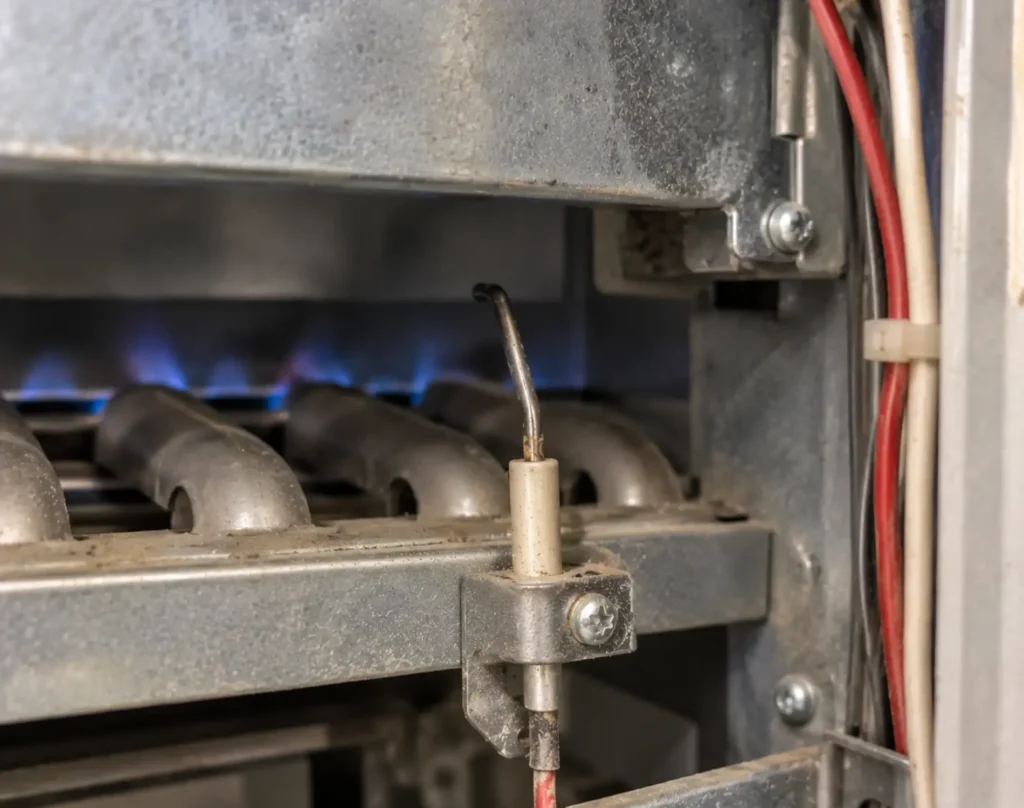
A furnace flame sensor is a safety device that checks whether your gas furnace's burners have ignited. If it doesn't detect a flame, the furnace shuts off the gas supply to prevent unburned gas from continuing to flow.
The sensor consists of a thin metal rod attached to a porcelain base. You'll usually find it near the burner assembly.
Since the sensor sits close to the burners, deposits can build up on its metal rod over time. This buildup can interfere with the electrical signal the sensor sends to the furnace's control board. As a result, even if the burners ignite normally, your furnace may fail to detect the flame and shut off the gas after just a few seconds.
What Are the Symptoms of a Dirty Furnace Flame Sensor?
Here are a few dirty flame sensor symptoms worth paying attention to -
- The burners shut off after a few seconds: Your furnace lights normally, but the flame doesn't stay on.
- Your furnace keeps trying to restart: It may repeat the ignition process several times before stopping.
- Your home isn't getting warm: The furnace may run briefly without producing enough heat to reach your thermostat setting.
- You see an error code: Some furnaces display a flashing light or diagnostic code indicating a flame-sensing problem.
- You notice deposits on the sensor: If a technician removes the sensor, they may find a coating on its metal surface.
A dirty flame sensor isn't always the reason for these problems. Faulty wiring, poor grounding, a bad igniter, or trouble with the gas supply can also affect your furnace. That's why, if your furnace is blowing cold air, it's better to have a technician find the cause before you pay for a new sensor.
What Are the Steps to Clean a Dirty Furnace Flame Sensor?
If you're wondering how to clean a flame sensor, here’s what you need to do -
Step 1 - Turn Off the Furnace and Allow It to Cool
Before touching anything, turn the thermostat off and disconnect electrical power to the furnace using its designated switch or circuit breaker. If the manufacturer's instructions require shutting off the gas supply, follow those directions as well.
Don't touch or disconnect any gas pipes because you could cause a gas leak. Before you reach inside the furnace, make sure it has cooled down completely. The burners and metal parts around them can stay hot even after you turn it off.
Step 2 - Locate the Flame Sensor
Once your furnace has cooled down, check your owner's manual to find out where the flame sensor sits. You should see a thin metal rod with a white porcelain base near the burners. Look for a wire attached to it to help you identify the part.
Also, don’t mistake the igniter for the flame sensor. The igniter lights the gas burners, and touching or trying to clean it can damage its delicate heating element.
If you can't confidently identify the correct part, stop immediately and call a technician.
Step 3 - Remove the Sensor Carefully
Most removable flame sensors are held in place by a single screw. You can check your furnace manual to see how to disconnect the wire and remove the screw. After you've done that, slowly pull out the sensor, taking care not to bend the metal rod or crack the porcelain base.
Before going any further, inspect it for cracks, corrosion, or other visible damage. If the porcelain is cracked or the metal rod is damaged, you should not try to clean or reinstall the sensor, as the damage could prevent it from detecting the burner flame properly. Have an HVAC technician inspect it and replace it if necessary.
Step 4 - Gently Clean the Metal Rod
If the sensor is intact and your manual allows cleaning, you should use the cleaning method recommended by the manufacturer.
Some manufacturers recommend using a fine abrasive pad to gently remove deposits from the metal rod. But cleaning instructions can depend on the furnace model, so check your owner's manual before choosing what to use.
Also, you should keep the following points in mind -
- Don't use coarse sandpaper, steel wool, or a wire brush unless your manufacturer specifically recommends it.
- Don't scrub hard enough to scratch or damage the metal.
- Don't use household cleaning sprays, oils, or chemicals.
- Don't bend the rod or put pressure on the porcelain base.
Step 5 - Reinstall the Sensor and Check the Furnace
Once you've finished cleaning, reinstall the sensor exactly as your manual directs.
- Make sure it's properly secured and reconnect its wire.
- Replace any access panels before restoring power.
- Then follow the manufacturer's startup instructions and check whether the furnace operates normally.
If the burners still shut off after a few seconds, don't keep resetting the furnace. Since cleaning didn't fix the issue, something else may be wrong. Have an HVAC technician check the flame sensor, its wiring, and the related components to find out why your furnace keeps shutting down.
When Should You NOT Clean a Furnace Flame Sensor Yourself?
You shouldn't attempt to clean a flame sensor if -
1. You Smell Gas Near the Furnace
If you smell gas, don't open the furnace, touch electrical switches, or try to fix anything. Even a small electrical spark could ignite leaking gas and cause a fire or explosion. Leave the building immediately and call your gas utility or 911 from a safe location. And don't return until the appropriate professionals tell you it's safe.
2. You Notice Cracks or Damaged Parts
If the sensor's porcelain base is cracked, its wire is damaged, or the metal rod shows signs of serious wear, don't try to clean it. These problems can interfere with the electrical signal the furnace uses to confirm that the burners are lit.
In this case, have an HVAC technician inspect the sensor and replace any damaged parts.
3. Your Furnace Keeps Shutting Down After Cleaning
If you've cleaned the flame sensor but your furnace still shuts off, there could be a problem with the wiring, electrical grounding, or burner flame. Don't keep restarting the furnace to see if it works.
That’s because repeated failed starts can cause your furnace to enter a safety lockout, preventing it from running until the issue is addressed. Have an HVAC technician inspect these parts and find out why it keeps shutting down.
4. You Have an Older Furnace or Can't Find the Sensor
Not every furnace uses the same flame-sensing setup. Older systems may have a standing pilot light and a different safety device.
If your furnace has a pilot light, follow the correct troubleshooting instructions for that system rather than assuming it has a removable flame sensor.
If you're unsure which system your furnace uses, check your owner's manual or have an HVAC technician identify the correct part before attempting any repairs.
| Call an Ace for Furnace Repair - (916) 455-4548 |
How Much Does Furnace Flame Sensor Replacement Cost?
The flame sensor replacement cost is around $100 to $300 for professional service, although the actual price can be higher depending on the furnace and the work required.
Several factors can affect the final price, like -
- Furnace model: Your furnace may need a specific sensor that costs more than a standard one.
- Sensor location: If the technician has to remove other parts to reach the sensor, the repair may take longer.
- Appointment time: You may pay more if you need someone to come out at night, on a weekend, or during a holiday.
- Other problems: If the technician finds damaged wiring or loose connections, fixing those issues will add to the bill.
Before agreeing to a replacement, ask your technician to confirm that the sensor is faulty and explain what the repair will cost.
Frequently Asked Questions About Furnace Flame Sensors
Can I clean a furnace flame sensor without removing it?
Most furnaces require you to remove the flame sensor before cleaning it. If you try cleaning it without taking it out, you could accidentally damage the igniter or other nearby parts.
Check your furnace manual for the correct steps, and if you're unsure how to remove the sensor, call an HVAC technician.
How long does a furnace flame sensor last?
A furnace flame sensor can last around 10 to 20 years, and some can last as long as the furnace itself. Its lifespan depends on how often you use your furnace and how well you maintain it. You don't need to replace it on a fixed schedule if it continues to function properly.
Can a furnace flame sensor be cleaned with vinegar?
Avoid using vinegar to clean your flame sensor. It can leave moisture or residue on the metal rod, which may interfere with the sensor's operation. Instead, check your furnace manual to see which cleaning method the manufacturer recommends.
How can you prevent furnace flame sensor problems?
You can't completely stop deposits from building up on a flame sensor, but annual furnace maintenance can help. During a tune-up, an HVAC technician can check the sensor, clean it if needed, and make sure the burners are operating properly. It's best to schedule this before Sacramento's colder months so you can address any problems before you need your heat regularly.
Takeaway
If your furnace keeps shutting off shortly after starting, a dirty flame sensor could be the reason. You may be able to fix it by removing the sensor and gently cleaning its metal rod using the method recommended in your furnace manual.
But if the sensor is damaged or cleaning hasn't fixed anything, don't keep restarting your furnace. Have an HVAC technician check what's wrong and make the necessary repairs.
Get Your Furnace Fixed with Ace Plumbing Heating & Air Conditioning
At Ace Plumbing Heating & Air Conditioning, we've been helping Sacramento homeowners with their heating problems since 1972. Whether you have a dirty furnace flame sensor, faulty ignition parts, or another heating issue, our technicians can find out what's wrong and explain what needs fixing.
We're a family-owned company with an A+ BBB rating and California Contractor License #313506. When you call us, we'll send a trained technician to check your furnace, explain the problem, and go over the repair costs with you.
You also won't have to deal with pushy salespeople or feel pressured to replace parts you don't need. So, call 916-455-4548 to schedule your furnace repair in Sacramento and get your home comfortable again.