


How to Lower Humidity in Your House
Does your home feel damp and stuffy even though the AC seems to be doing its job? Your first thought may be that something has gone wrong with the system. But the explanation could be much simpler: too much humidity in the air.
And yes, something as ordinary as humidity can make your home feel uncomfortable. It can leave moisture on your windows, make walls and ceilings feel damp, and encourage mold or mildew in bathrooms, basements, and other humid areas.
So, how to reduce humidity in house before it becomes a bigger headache? Let’s look at what causes excess humidity, the simple things you can do to bring it down, and when the problem may need professional attention.
What is the Right Humidity Level Inside a House?
According to the U.S. Environmental Protection Agency (EPA), indoor relative humidity for most homes should be between 30 percent and 50 percent. But when you’re unsure, you can also use a hygrometer to know the exact humidity level in your home.
Here is a look at what the numbers have to say:
| Indoor humidity | What it can mean |
| Below 30 percent | Air may feel excessively dry |
| 30 to 50 percent | Generally a comfortable target range |
| 50 to 60 percent | Humidity may begin to feel uncomfortable |
| Above 60 percent | Moisture problems become more concerning |
The EPA states that condensation indicates excessive indoor humidity and recommends addressing the source of the moisture instead of simply wiping away the water.
How Can You Lower Humidity in Your House?
Here are some important changes that you can make in your everyday life to reduce excessive humidity indoors.
1. Use bathroom exhaust fans
Your bathroom gets foggy every time you use the shower, so better ventilation can help. Also, good ventilation should vent outside instead of moving the air into the attic or another indoor space.
2. Use your kitchen exhaust fan
Manage the moisture and heat from cooking by using a range hood or kitchen exhaust fan. Once again, the ventilation should vent outside instead of simply spreading the moisture indoors.
3. Run your air conditioner when appropriate
As the warm indoor air crosses the cold evaporator coil, moisture condenses and drains away. This is why a properly operating AC system helps control indoor humidity. However, if you discover that your home is damp despite the HVAC system running, then you need to get your system checked.
4. Replace or clean the air filter as recommended
A dirty filter restricts normal airflow through the HVAC system, resulting in compromised performance.
Hence, check your air filters and be sure to follow the manufacturer’s recommendations for replacement. While the filter might not be the complete solution to a humidity problem, it can help keep the HVAC system working well.
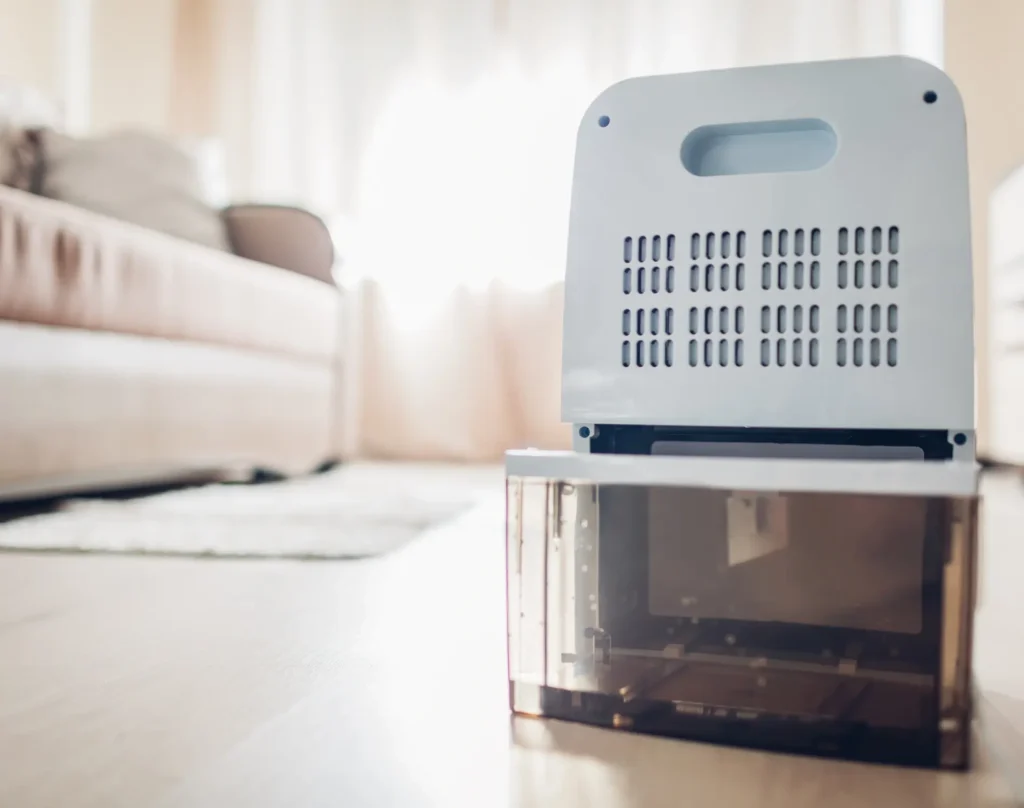
5. Use a dehumidifier
Consider installing a dehumidifier if your home suffers from persistent humidity. A whole-home dehumidifier can work with your ductwork to help balance indoor humidity levels. But before you buy it, you need to consider the size of the home, the existing HVAC system, and how high the humidity gets.
6. Quickly fix water leaks
Fixing water leaks quickly can prevent extra moisture from spreading into walls, floors, and other areas of your home, making indoor humidity easier to control. So, you should check for problems such as:
- Faucets that keep dripping
- Pipes with slow or hidden leaks
- Water leaking around the water heater
- Leaks coming from the roof
- Damp or wet crawl spaces
- Cracked or damaged window seals
- Hidden plumbing leaks behind cabinets
- Water pooling near your home’s foundation
7. Keep your gutters and downspouts clear
The gutter system of your home functions to move rainwater away from your foundation and roof. But once the gutters are clogged, water can overflow and collect around the house. Also, if the soil around the foundation is wet, moisture can make its way indoors. To help prevent this, clean the gutters regularly and ensure the downspouts direct the water away from the foundation.
8. Be careful with houseplants
Most houseplants tend to release moisture indoors through the process of transpiration. If you have several houseplants in one room, try spreading them throughout the house or moving some away from rooms that already feel damp, such as bathrooms or kitchens.
9. Opt for a professional HVAC inspection
If you’ve tried these fixes and your home is still humid, you need to opt for a professional HVAC inspection. It could be poor airflow, dirty coils, or even a drainage problem that’s keeping the system from removing moisture properly. So, you should hire a professional to check your HVAC system so you know what’s causing the problem and what needs to be fixed.
What are the Signs That Your House Has Too Much Humidity?
Here are some of the common signs of excessive humidity in your home:
- Condensation forming on windows
- Damp carpeting or upholstery
- Paint that begins to bubble, peel, or discolor
- A musty or damp smell
- Moisture around pipes or ductwork
- Rooms that feel sticky even when the temperature seems comfortable
- Mold or mildew appearing around bathrooms, windows, or other damp areas
- Increased pest activity in damp areas
- Certain rooms feeling noticeably more humid than the rest of the house
- An air conditioner that seems to run frequently without making the home feel comfortable
Why Does Humidity Get So High Inside a House?
Before trying to find out how to reduce humidity in house, you need to find out the main reason behind it:
1. Cooking and showering
Some of the main sources of indoor humidity include cooking, boiling water, and running a dishwasher. The situation gets worse without proper ventilation, and the moisture can spread to neighboring rooms as well.
2. Drying clothes indoors
Drying wet clothes indoors without ventilation is one of the main causes of indoor humidity. Try to dry the clothes outside as much as possible or make sure your dryer vents to the outside.
3. Plumbing leaks
Even a small plumbing leak can leave moisture inside cabinets, walls, floors, or other areas you may not notice right away. So, you should check under sinks, around the water heater, and near any exposed pipes. If you notice a damp smell or stains that weren’t there before, there could be a leak nearby.
4. Roof, gutter, and drainage problems
There are some external sources of indoor humidity as well. A damaged roof, blocked gutter, poorly directed downspout, or drainage problem can allow water to collect around the foundation. And over time, the moisture can enter crawl spaces, walls, or other parts of your home.
The EPA recommends keeping the gutters clear and ensuring water drains away from the foundation.
5. HVAC problems
Your air conditioner also helps remove moisture from the air. As warm air passes over the cooling coils, the moisture condenses and drains away. But if your HVAC system has poor airflow, dirty components, or another issue, it may not remove as much moisture as it should.
What Is the Best Humidity Level for Home in Winter?
The best humidity level for a home in winter is generally around 30% to 40%, although you may need to keep it lower during very cold weather to reduce condensation on windows.
However, keeping humidity too low can create a different problem. When humidity drops too far, you may experience irritated nasal passages, dry skin, static electricity, and excessive dryness around wood surfaces.
These dry conditions can be more noticeable when your heating system runs for long periods during colder weather. But a hygrometer can help you keep track of the actual humidity level so you know whether your home needs more or less moisture.
Quick Queries From Our Clients
1. Should I use a dehumidifier all the time?
No, use it only when needed. Try to keep indoor relative humidity between 30% and 50%, since levels below 30% can make the air too dry. Portable units are recommended for a single room, while whole-home systems may be better for persistent house-wide moisture. Also, be sure to monitor the humidity levels indoors using a hygrometer.
2. high humidity damage my house?
Yes, too much humidity can result in mold, condensation, surface decay, and damp materials. And the resulting moisture can travel into crawl spaces, walls, or areas near plumbing. The right kind of moisture control can help prevent indoor mold, while fixing leaks helps avoid further damage.
3. Is 60 percent humidity too high for a house?
Yes, 60% humidity is quite high. According to the EPA, indoor relative humidity should ideally remain between 30% and 50%. However, if the levels exceed 60%, check for leaks, damp crawl spaces, poor ventilation, or issues with your HVAC system. Be sure to track the humidity for a number of days to determine whether the higher level is persistent.
| Control Your Indoor Humidity - Call (916) 455-4548 |
Takeaway
Knowing how to reduce humidity in house starts with finding where the extra moisture is coming from. Keep indoor humidity around 30% to 50%, use exhaust fans to remove moisture from cooking and showering, repair leaks promptly, and keep your HVAC system maintained. And a hygrometer can help you spot consistently high readings.
But if humidity stays high despite these steps, have your HVAC, plumbing, or drainage system checked for an underlying problem.
Keep Your Home Comfortable With Ace Plumbing Heating and Air Conditioning
Your home should feel comfortable, not damp, sticky, or musty. If excess humidity keeps coming back, there may be more going on than you can see. A plumbing leak, poor ventilation, or an HVAC problem could be adding unwanted moisture to your home.
Ace Plumbing Heating and Air Conditioning has served Sacramento-area homeowners since 1972. As a family-owned and locally operated company with an A+ BBB rating, we bring decades of experience to plumbing and HVAC services. Whether you are trying to understand how to reduce humidity in the house or your HVAC system is struggling to keep indoor moisture under control, our experienced team can inspect the problem and help you find the right solution.
Call (916) 455-4548 and let Ace Plumbing Heating and Air Conditioning help you get your home comfortable again.