


Why Is My Faucet Leaking? Causes and How to Fix It
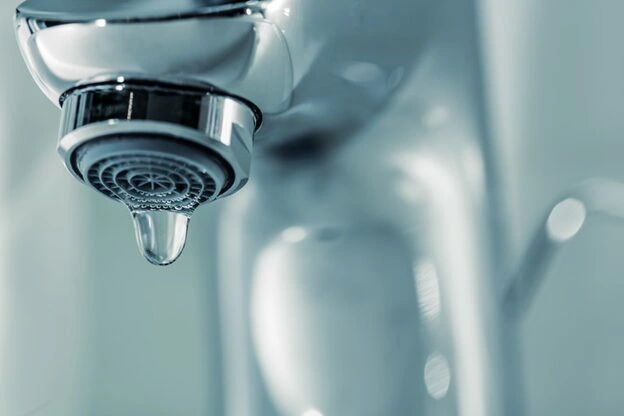
A dripping faucet is easy to ignore until you add up what it costs. The EPA estimates that a faucet dripping once per second wastes more than 3,000 gallons a year. That's water you pay for and never use.
The short answer: most faucet leaks come from a worn washer, O-ring, seal or cartridge. These are cheap parts that wear out with use, and most can be replaced in under an hour once you know which one has failed. Below, we'll walk through how to find the cause, how to fix a dripping faucet yourself, and when it makes more sense to call a plumber.
Types of Faucets (and Why It Matters)
The fix depends on what kind of faucet you have. There are four common types:
- Compression faucet: two separate handles (hot and cold) that you twist to tighten. These use rubber washers to stop the water and are the type most likely to drip.
- Cartridge faucet: one or two handles that move smoothly without tightening down. A cartridge inside controls the flow.
- Ball faucet: a single handle sitting on a rounded cap, common on kitchen sinks. A slotted ball, springs and rubber seats control the water.
- Ceramic disc faucet: a single lever on a wide, round body. Two ceramic discs slide against each other to open and close the flow. These are the most durable type.
If you're not sure, take the handle off (steps below) and look inside, or snap a photo and bring it to the hardware store.
Where Is the Leak Coming From?
Where the water shows up usually tells you which part has failed:
| Where it leaks | Most likely cause |
|---|---|
| Drips from the spout | Worn washer or valve seat (compression), worn cartridge, worn seats and springs (ball), or worn seals (disc) |
| Leaks around the handle | Worn O-ring or a loose packing nut |
| Pools at the base of the faucet | Worn O-rings on the spout (common on single-handle kitchen faucets) |
| Water under the sink | Loose supply line, a failed connection or a cracked pipe. This is not a faucet part. |
What Causes a Leaky Faucet?
- Worn washer. The most common cause on compression faucets. Every time you close the handle, the washer is pressed against the valve seat. Over time it hardens, cracks or flattens. Cranking the handle tighter to stop the drip only wears it out faster.
- Faulty O-ring. The O-ring is a small rubber ring around the stem that keeps water from escaping around the handle. When it wears out, you'll see water near the handle or around the base.
- Worn or corroded valve seat. The valve seat is where the washer presses down inside the faucet body. Age and mineral buildup from hard water can pit or corrode it, so even a new washer can't seal.
- Worn cartridge. In cartridge faucets, the internal seals wear out with years of use. A drip from the spout or a handle that's hard to turn usually means the cartridge needs replacing.
- Loose parts. Packing nuts and adjusting rings can work loose over time and let water seep past.
- High water pressure. If your home's water pressure is too high, it can push water past seals that are otherwise fine. A drip that's worse at certain times of day, or several fixtures dripping at once, points to pressure. A plumber can test it and adjust or replace the pressure regulator.
- Improper installation. Parts that are the wrong size or installed out of order will leak, sometimes worse than before. We see this often after a DIY repair with a "close enough" part.
How to Fix a Dripping Faucet
You'll need an adjustable wrench, flathead and Phillips screwdrivers, replacement parts that match the old ones exactly, and a towel. Plumber's grease and white vinegar help too.
Steps for every faucet type:
- Shut off the water. Turn the supply valves under the sink clockwise until they stop. If there are no valves under the sink, or they won't close, turn off the water to the house.
- Drain the line. Open the faucet to let out the remaining water and relieve the pressure.
- Cover the drain. Use a stopper or a rag so small screws and clips don't disappear down the drain.
- Take the handle off. Pry off the decorative cap with a flathead screwdriver, remove the screw underneath, and lift off the handle. Take a photo at each step so you can reassemble everything in order.
- Remove the stem or cartridge. Depending on the faucet, loosen the packing nut with a wrench or pull the retaining clip, then lift out the stem or cartridge.
- Replace the worn part (see the next section for your faucet type). Bring the old part to the store to get an exact match. Clean any mineral buildup with white vinegar before you put things back.
- Reassemble and test. Put everything back in reverse order, then turn the water on slowly and check for drips at the spout, handle and base.
Fixes by faucet type:
- Compression faucet: Remove the brass screw at the bottom of the stem and replace the seat washer. Replace the O-ring on the stem too while it's apart, and coat the new one with plumber's grease. If the faucet still drips, the valve seat is probably pitted. It can be replaced with a seat wrench or smoothed with a seat dresser. Don't overtighten the screw: a crushed washer will leak again.
- Cartridge faucet: Pull the retaining clip and lift the cartridge straight out (a stubborn one may need a cartridge puller). Replace the whole cartridge with the same brand and model. Note which way the old one faced: installing it backward swaps your hot and cold.
- Ball faucet: Buy a ball faucet repair kit for your brand. Unscrew the cap and remove the cam and ball, then use a screwdriver to pull out the rubber seats and springs. Fit the new ones, replace the spout O-rings if the base was leaking, and reassemble.
- Ceramic disc faucet: The discs themselves rarely fail. Remove the disc cylinder, replace the rubber seals underneath, and soak the cylinder in white vinegar to clear mineral deposits. If a disc is cracked, replace the cylinder.
For a dripping tub spout, see our guide on how to fix a leaky bathtub faucet.
When to Call a Plumber
Most drips are a simple parts swap. Call a plumber when:
- The faucet still drips after you've replaced the washer or cartridge
- The valve seat is corroded or the stem won't come out
- The shutoff valves under the sink are stuck or leak when you turn them
- Water is leaking under the sink, behind the wall or at the supply lines
- You can't identify the brand or find matching parts
- Several faucets are dripping at once, which suggests high water pressure
Sometimes replacing the whole faucet makes more sense than repairing it. This is especially true for older fixtures where parts are hard to find, or when the faucet body itself is corroded. A new faucet also uses less water. Hard-to-turn handles are a common reason taps get left partly open, especially for kids and anyone with limited hand strength, and a new lever-style faucet fixes that too. Our team handles faucet repair and fixture installation throughout the Sacramento area.
Get Your Leaky Faucet Fixed Right the First Time
If you'd rather skip the trial and error, Ace Plumbing Heating & Air Conditioning has been fixing Sacramento plumbing for 54 years. Call 916-455-4548 or request service online, and we'll find the cause and stop the drip. For other jobs around the house, see our full range of plumbing services in Sacramento.