


How Often to Change Air Filter in House: A Simple Guide for Homeowners
Have you noticed your energy bill creeping up lately? Or maybe your living room feels a bit dustier than usual, even right after you clean.
You need to check your home air filters monthly and replace them every 1 to 3 months. The exact timing of changing air filters depends on the filter type, your HVAC system, pets, indoor air quality, and how often the system runs. When your cooling system runs constantly, but your rooms never quite reach that refreshing temperature, the culprit is often hiding right behind your return vent grill.
Most homeowners don’t think about their heating and cooling system until something goes wrong. However, knowing how often to change the air filter in your home setup is the easiest way to prevent unexpected breakdowns, protect your indoor air quality, and keep your monthly energy bills under control.
This simple guide breaks down exact replacement schedules, warning signs of a clogged filter, and how daily living conditions in your home change your maintenance timeline.
How Often Should You Change Your HVAC Filter?
Normally, it's best to change a basic 1-inch to 3-inch filter every 1-3 months. However, every household operates differently. A quiet home with one resident will not accumulate dust at the same speed as a busy household with three dogs and seasonal allergies.
If your home uses the same HVAC system for heating and cooling, the filter is usually used year-round, not just when the air conditioner is running.
Here is a quick look at standard replacement timelines based on your living situation:
| Household Environment | Recommended Replacement Frequency |
| Vacation Home or Single Resident (No Pets) | Every 6 to 12 Months |
| Average Suburban Home (No Pets) | Every 90 Days |
| Home with One Dog or Cat | Every 60 Days |
| Home with Multiple Pets or Allergy Sufferers | Every 30 to 45 Days |
| Homes using 4-inch to 6-inch Media Filters | Every 6 to 12 Months |
If you are wondering how often to change air conditioner filter in house systems during heavy cooling months, checking it monthly is always a smart habit.
What Factors Change Your Filter Replacement Schedule?
No two homes use their cooling systems in the exact same way. Several key factors determine how fast dust and debris build up inside your ductwork.
1. Household Pets
Pet hair and dander are major causes of clogged filters. As your system draws air in to cool your rooms, floating fur gets pulled right up to the mesh lining. If you have shedding pets, you need to shorten your replacement window significantly.
2. Allergy and Asthma Issues
If you have older members in your family or anyone in your home has seasonal allergies, asthma, or is sensitive to dust, a dirty filter can make things worse. Checking the filter every month and replacing it when it gets dirty can help keep pollen, dust and other particles from being blown back into your rooms.
3. Home Size and Air Volume
Smaller homes pass the total volume of air through the system more times per day than large homes. This means a smaller property can actually load up a filter quicker if the unit runs constantly.
4. Local Weather and Dust Conditions
During hot summer stretches, your cooling system runs longer than usual. More air moving through the system means more dust trapped on the surface of your filter.
How Does Filter Thickness and Type Affect Longevity?
Not all replacement screens are built the same way. The thickness and material composition of your unit directly control how long it lasts before restricting airflow.
- Fiberglass Filters (1-Inch): These inexpensive flat filters trap large debris to protect system equipment, but they do little for fine air quality. They need replacement every 30 days.
- Pleated Accordion Filters (1 to 3-Inch): Made from woven cotton or synthetic material, pleated designs capture fine particles like pollen and pet dander. Often replaced every 1 to 3 months, depending on household conditions and the manufacturer's recommendation.
- Deep Media Filters (4 to 6-Inch): Installed in specialized filter cabinets near your furnace or air handler, these thick units offer massive surface area. They absorb heavy dust for up to a full year without choking system airflow. They often last 6 to 12 months, but the actual interval varies by system and filter.
What Are the Warning Signs Your Air Filter Needs Changing Now?
You don’t always have to rely strictly on the calendar date. Your home gives off visible and physical clues when airflow becomes blocked.
- Dust Buildup Near Supply Vents: If you notice thin layers of grey dust accumulating around your vent covers right after cleaning, your screen has reached maximum capacity.
- Weak Airflow From Your Vents: If little air is coming from the supply vents compared with normal, a dirty filter may be restricting airflow.
- Unusually High Monthly Energy Bills: Restricted airflow forces your cooling equipment to run longer cycles to reach your thermostat setting, pulling excess electricity.
- Ice Formation on Refrigerant Lines: Severe airflow blockage prevents warm air from passing over your cooling coil. This causes the internal coils to drop below freezing and form ice blocks.
A heavily clogged filter creates resistance to airflow. Your blower then has a harder time moving the amount of air the HVAC system was designed to handle. That doesn't mean every AC problem is caused by a dirty filter. But checking the filter is one of the easiest first steps when airflow suddenly seems weak.
| For Fast HVAC Maintenance in Sacramento - Call (916) 455-4548 |
How Can You Change an HVAC Air Filter Yourself?
Replacing a standard disposable filter is usually a simple maintenance task.
- Turn off the HVAC system.
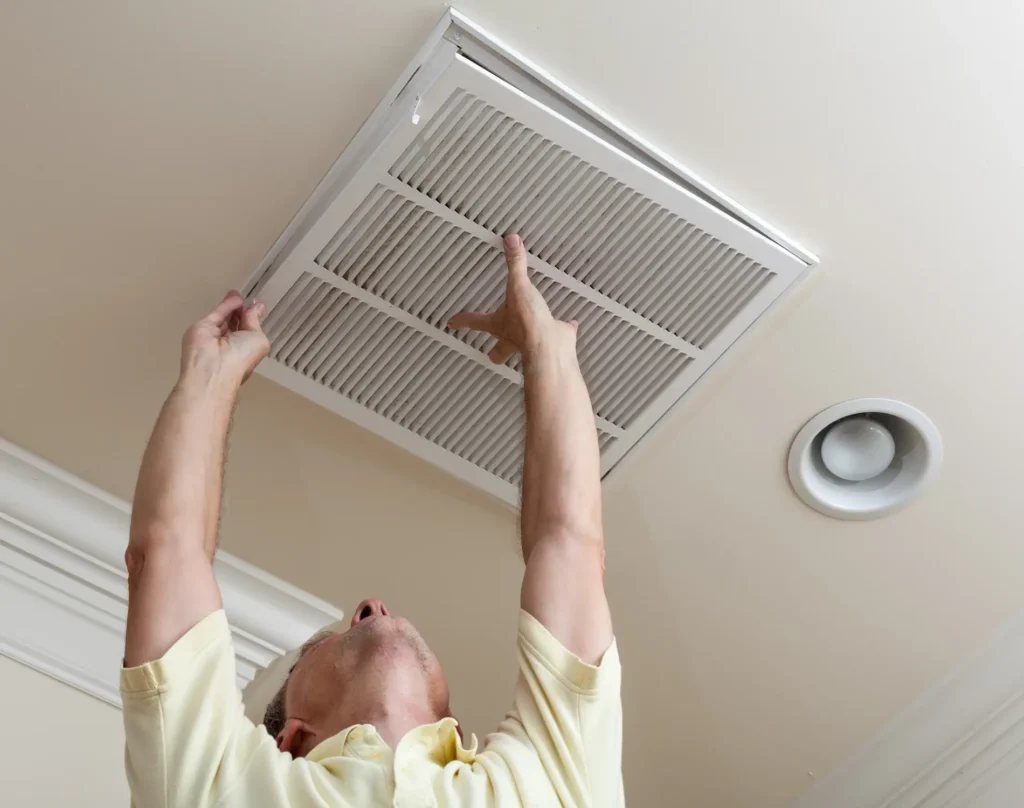
- Find the filter. It’s commonly located near the return-air grille or indoor air handler.
- Remove the old filter.
- Take a photo of the old filter before removing it. That makes it easier to remember the airflow direction when installing the new one.
- Check the size dimensions printed on the side frame to make sure the replacement matches.
- Look for the airflow arrow on the new filter and point it in the correct direction.
- Slide the new filter into place and secure the cover.
- Turn the HVAC system back on.
Note: If you cannot find the filter, are unsure which direction it should face, or notice heavy dust accumulation inside the cabinet when you remove it, it’s best to contact an HVAC technician.
What Happens If You Wait Too Long to Change the Filter?
A dirty filter does more than look unpleasant. Your HVAC system depends on steady airflow. When the filter becomes packed with dust and debris, less air can move through it. That can contribute to several problems.
Your System Has to Work Harder
Restricted airflow can make the blower work harder to move air through your home. Over time, unnecessary strain is not good for HVAC equipment.
Cooling Coils Can Develop Problems
Your air conditioner needs good airflow to keep the indoor cooling coil at the right temperature. If airflow is too low, the coil can get too cold and start to freeze.
If you see ice on your indoor unit or refrigerant lines, simply replacing the filter may not solve the entire problem. The system should be inspected by an HVAC expert before you continue running it.
Dust Can Reach HVAC Components
The filter is also there to help protect the equipment. A filter that is missing, damaged, incorrectly installed, or badly overloaded can allow more debris into the system. Replacing a filter on time costs very little, but cleaning or repairing neglected equipment requires professional service and costs significantly more.
Common Questions about Changing Air Filters
How often should Sacramento homeowners change HVAC filters during wildfire season?
There is no fixed wildfire-season interval because smoke levels and HVAC runtime can change quickly. During smoky periods, check your filter much more frequently and replace it when it becomes heavily soiled. The EPA specifically recommends frequent filter checks during wildfire smoke events. A professional HVAC technician can also determine whether your system can safely accommodate a higher-efficiency filter such as MERV 13.
How do I know which HVAC filter to buy?
Look at the old filter for its size, such as 16 × 25 × 1. The replacement should match the required dimensions for your system.
Also check the HVAC manufacturer's recommendations for the appropriate filter type and MERV rating. A higher-rated filter is not automatically better for every HVAC system because some systems may not be designed to handle the added airflow resistance. When you work with a trusted HVAC company, they help you choose the right filter for your unit.
Takeaway
So, how often should you change an air filter in your house?
For many standard filters, 30 to 90 days is a sensible starting range, while thicker media filters may last several months. But your home's real replacement schedule depends on how much work the filter is doing.
Pets, heavy AC use, dust, remodeling, smoke, and wildfire conditions can all shorten its life.
The simplest routine is also the most reliable: look at your filter every month, follow the manufacturer's recommendations, and replace it sooner when conditions demand it.
Need Help With Your HVAC or Indoor Air Quality? Call Ace Plumbing, Heating & Air Conditioning
Still trying to figure out how often to change the air conditioner filter in the house based on your particular HVAC system?
Ace Plumbing, Heating & Air Conditioning helps homeowners throughout Sacramento and surrounding communities with heating, cooling, HVAC maintenance, and indoor air quality needs. With over 50 years of experience, our licensed team (License Number 313506) focuses on quality service, clear communication, and 24/7 emergency support.
We’re also BBB-accredited with an A+ rating and believe in quality workmanship. Call us at (916) 455-4548 or contact us to schedule HVAC service.