


Can Boiling Water Unclog a Drain? What to Know Before You Try It
A clogged drain is the last thing you want to face when your day is already busy. When that happens, you need a quick solution rather than searching endlessly or calling family for advice.
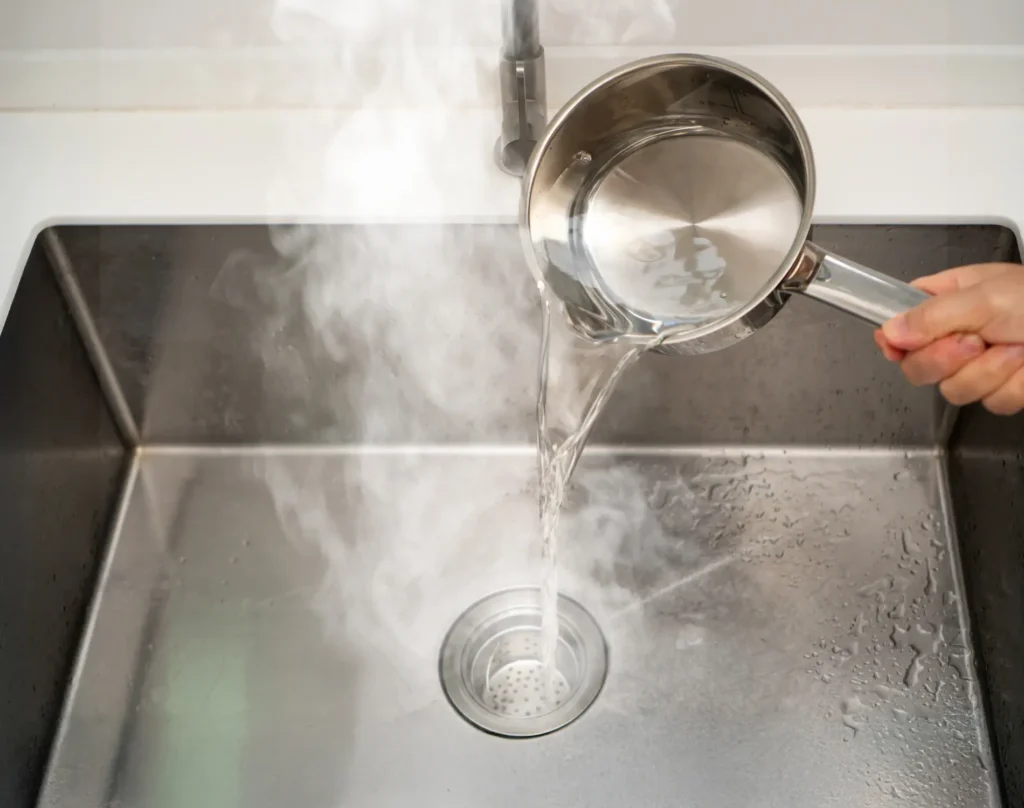
So can boiling water unclog a drain? Well, boiling water may help loosen small amounts of grease or soap buildup, but pouring it directly into a drain can damage some plumbing materials and won't remove a solid blockage such as hair or an object.
In this blog, we’ll explain how boiling water affects your pipes and plumbing and what safer alternatives you can use.
What Happens When You Pour Boiling Water Down a Drain?
The final outcome of pouring boiling water depends on the fixture, the plumbing system, and the type of blockage. Read below to learn more about how pouring boiling water affects your plumbing system.
1. PVC and Plastic Plumbing
Boiling water can place unnecessary heat stress on some plastic drain components, especially if repeatedly exposed to high temperatures. Because you may not know the exact materials or condition of the plumbing, avoid routinely pouring boiling water directly down the drain.
In such a case, using a drain snake or a plunger is a safer option.
2. Toilets and Porcelain Fixtures
Never use boiling water as a DIY method for unclogging a toilet.
A sudden change in temperature can create thermal stress in porcelain and potentially cause cracking. A damaged toilet can turn a simple clog into a much more expensive plumbing problem.
If your toilet is clogged, use a toilet plunger designed for the fixture or contact a professional plumber if the blockage doesn’t clear.
3. Older Plumbing Systems
Older homes may have cast-iron, galvanized steel, or other aging plumbing components. While metal plumbing is more resistant to heat as compared to plastic material, older plumbing can suffer from deteriorating joints. With older plumbing systems, aggressive DIY methods are not recommended.
If you're unsure what type of plumbing your home has, avoid experimenting with boiling water and call an experienced plumber to check out the situation.
When Can Hot Water Actually Help a Clogged Drain?
Hot water may soften or move some grease near the drain opening, but it may not remove grease buildup farther inside the pipe. As the grease cools, it can stick to the pipe again. That's why repeatedly pouring hot water down a greasy drain isn't a dependable long-term solution.
For a minor slowdown, hot tap water is a better option than pouring water directly from a boiling kettle. But if the drain remains slow or becomes clogged again, then you need to apply a different solution.
What Types of Clogs Can Boiling Water Help With?
| Type of Clog | Can Hot Water Help |
| Light grease buildup | Sometimes |
| Soap residue | Possibly |
| Hair clog | No |
| Food debris | Limited |
| Solid object | No |
| Tree roots | No |
| Major pipe blockage | No |
Boiling Water vs. Hot Tap Water: Which Is Better?
Boiling water and hot tap water are not the same when it comes to your plumbing. Pouring boiling water down the drain may soften grease or loosen minor buildup, but it can also put unnecessary heat stress on some pipes and plumbing connections.
If the drain is just starting to slow down, try hot tap water first. It may loosen some grease or residue near the drain. Skip the boiling water, though, especially if you don't know what type of pipes you have. And if hair, food, or another object is causing the clog, hot water isn't going to remove it.
If hot tap water doesn't improve the drainage, it is better to switch to a mechanical method, such as a plunger or drain snake, rather than repeatedly pouring boiling water down the drain.
What Should You Try Instead of Boiling Water?
Instead of risking pipe damage with boiling water, you can try these safe mechanical methods.
1. Use a Plunger
A strong plunger of the right size is perfect when it comes to sinks and tubs. A cup-style plunger works well by creating a tight seal around the drain. A few plunges are enough to restore the normal drainage flow.
2. Try a Drain Snake
Using a plastic drain snake or hand-operated drain auger is effective when it comes to removing physical debris like hair in a shallow bathroom clog.
3. Check the P-trap
Clogs can collect in the P-trap beneath a sink. If you're comfortable removing it, place a bucket underneath first and carefully disconnect the trap to remove debris. If you're unsure how to do this, call a plumber.
4. Avoid Mixing Drain-Cleaning Chemicals
Never mix different drain cleaners or combine a chemical drain cleaner with household cleaning products. If you have already used a chemical product, don't immediately follow it with another substance unless the product instructions specifically say it is safe.
Chemicals left in standing water can cause serious injuries when someone tries to plunge or dismantle the drain.
When Should You Call a Plumber for a Clogged Drain?
DIY methods are not always effective, so you should call a plumber if:
- The clog does not clear after plunging or using basic mechanical methods.
- The same drain repeatedly clogs.
- You notice a persistent, foul sewer odor.
- Multiple drains are running slow at the same time.
- Water backs up into a sink, tub, or floor drain.
- You hear gurgling sounds coming from drains or toilets.
- There is standing wastewater that won't drain.
- Chemical drain cleaners fail to work.
Among these warning signs, multiple slow drains or recurring backups are the most critical to address. In such cases, a professional plumber can effectively determine whether the problem is a localized clog or requires extensive drain service.
Frequently Asked Questions
Can I pour boiling water down a bathroom sink?
It is better to avoid pouring freshly boiled water directly into a bathroom sink, especially if you are unsure what type of pipes or drain components are installed. For a minor slowdown, use warm or hot tap water instead and try a plunger or drain snake if needed.
How often can I use boiling water to clean my drains?
There is no need to regularly pour boiling water down a drain as a maintenance routine. For everyday drain care, focus on keeping food, grease, hair, and other debris out of the drain. If a drain repeatedly slows down, the buildup may need to be removed using professional plumbing techniques rather than repeatedly flushed with hot water.
What should I do if my drain clogs again after I clear it?
If the same drain keeps clogging, there may be more buildup farther down the line. It could also point to another plumbing issue. If it happens again after you've cleared it, it's worth having a plumber take a look. They can find out what's causing the blockage and whether the problem is limited to that drain or affecting the larger plumbing system.
| Get Plumbing Assistance from Trusted Sacramento Plumbers - Call (916) 455-4548 |
Final Thoughts
Boiling water isn't a fix for every clogged drain. It may help with a little grease or residue, but it won't do much for hair, food, or something stuck in the pipe. For a minor clog, try a plunger or drain snake first. If the drain keeps backing up or the clog won't clear, it's time to have a plumber check it out.
Get Your Drain Flowing Again With Ace Plumbing Heating & Air Conditioning
A stubborn or recurring clog may indicate a deeper plumbing issue that requires professional attention. That’s where Ace Plumbing, Heating & Air Conditioning can help. We have proudly served residential and commercial customers throughout the Sacramento area for more than 50 years.
Our team of licensed plumbers (#313506) provides quality plumbing services like drain cleaning, hydro jetting, and sewer line inspections to help unclog drains.
As a BBB-accredited company with an A+ rating, we take the time to inspect your plumbing and determine what’s causing the blockage. Whether it’s buildup, a deeper obstruction, or a recurring drainage issue, we’ll help you find the right solution. Call us at (916) 455-4548 to schedule professional plumbing service today.